Tiling is judged on how it looks and fails on what is behind it. A cracked tile, a grout line that keeps opening or sealant that turns black within a year are almost never problems with the tile, the grout or the sealant. They are the surface reporting on the preparation underneath.
Fylde Bathrooms tiles bathrooms across Cleveleys, and the useful thing to understand as a customer is what preparation actually involves, because it is the part that costs time, cannot be seen afterwards, and decides everything.
What you are tiling onto matters more than what you tile with
Tiles are rigid and they do not tolerate movement. Anything that flexes, absorbs water or is not properly bonded to what is behind it will eventually be reported by a crack or an open joint.
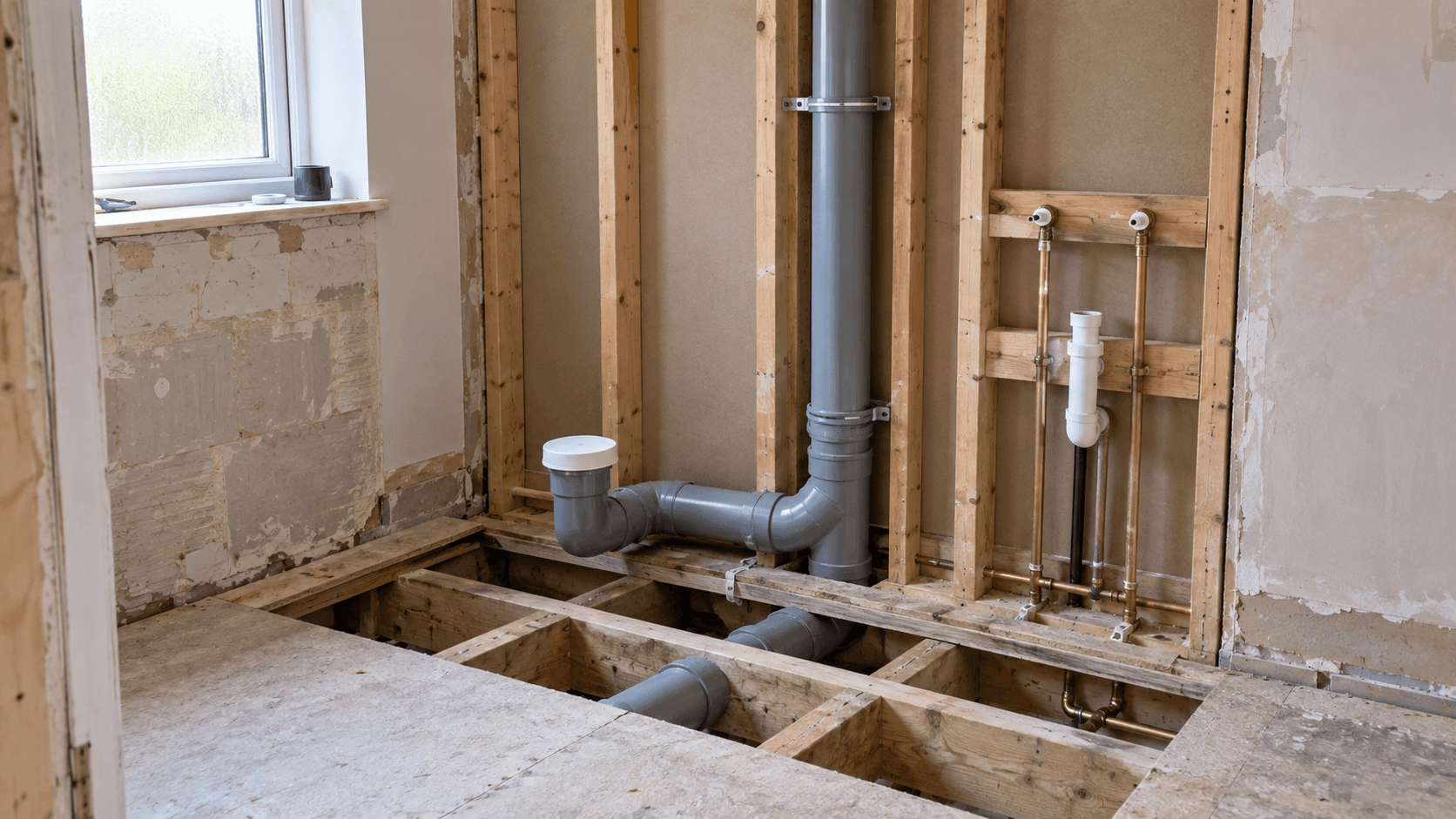
In wet areas that generally means tile backer boards rather than standard plasterboard, because they are stable when wet and provide a sound base for a waterproof layer. Ordinary plasterboard in a shower area is a short-term decision with a long-term cost.
Existing surfaces need honest assessment rather than optimism. Blown or hollow plaster, old adhesive left proud, and paint or wallpaper that has not been removed are all reasons for tiles to fail early. Tiling over an unsound wall transfers the problem rather than covering it.
Tiling work starts from tile size, wall condition, floor movement, waterproof boards, trims, grout choice and access, and the first four of those are the preparation that decides the outcome.
- Tile backer boards in wet areas, not standard plasterboard.
- Blown or hollow plaster must be dealt with, not tiled over.
- Old adhesive, paint and paper have to come off first.
- Anything that flexes will eventually crack the tiles above it.
Floors move, and floors are where tiling fails
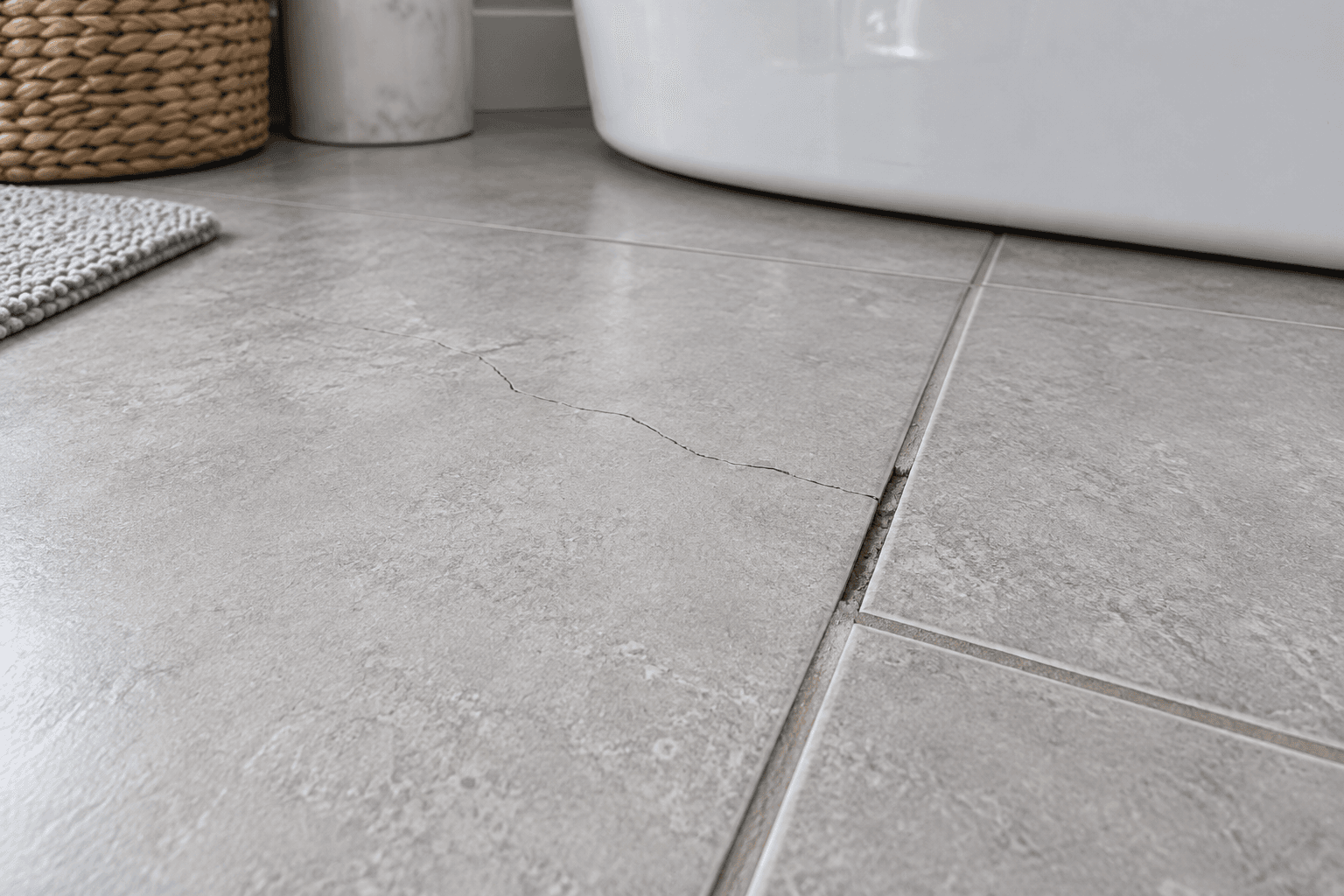
Floor movement is the most common cause of cracked bathroom floor tiles, and it usually comes from a timber floor that deflects slightly underfoot. It only needs to be slight: tiles have almost no tolerance for it.
The remedy is stiffening the deck before tiling: additional support, a suitable board over the existing floorboards, or an uncoupling layer designed to absorb small movements between the substrate and the tiles. Which is appropriate depends on the floor, and it should be established before a tile is chosen.
Tiling straight onto original floorboards is the classic error. Boards move individually, and every joint between them is a future crack in the tiling above.
This is worth raising early, because the answer affects both cost and finished floor height, and finished floor height affects door clearances and thresholds.
Tile size changes what the wall has to be
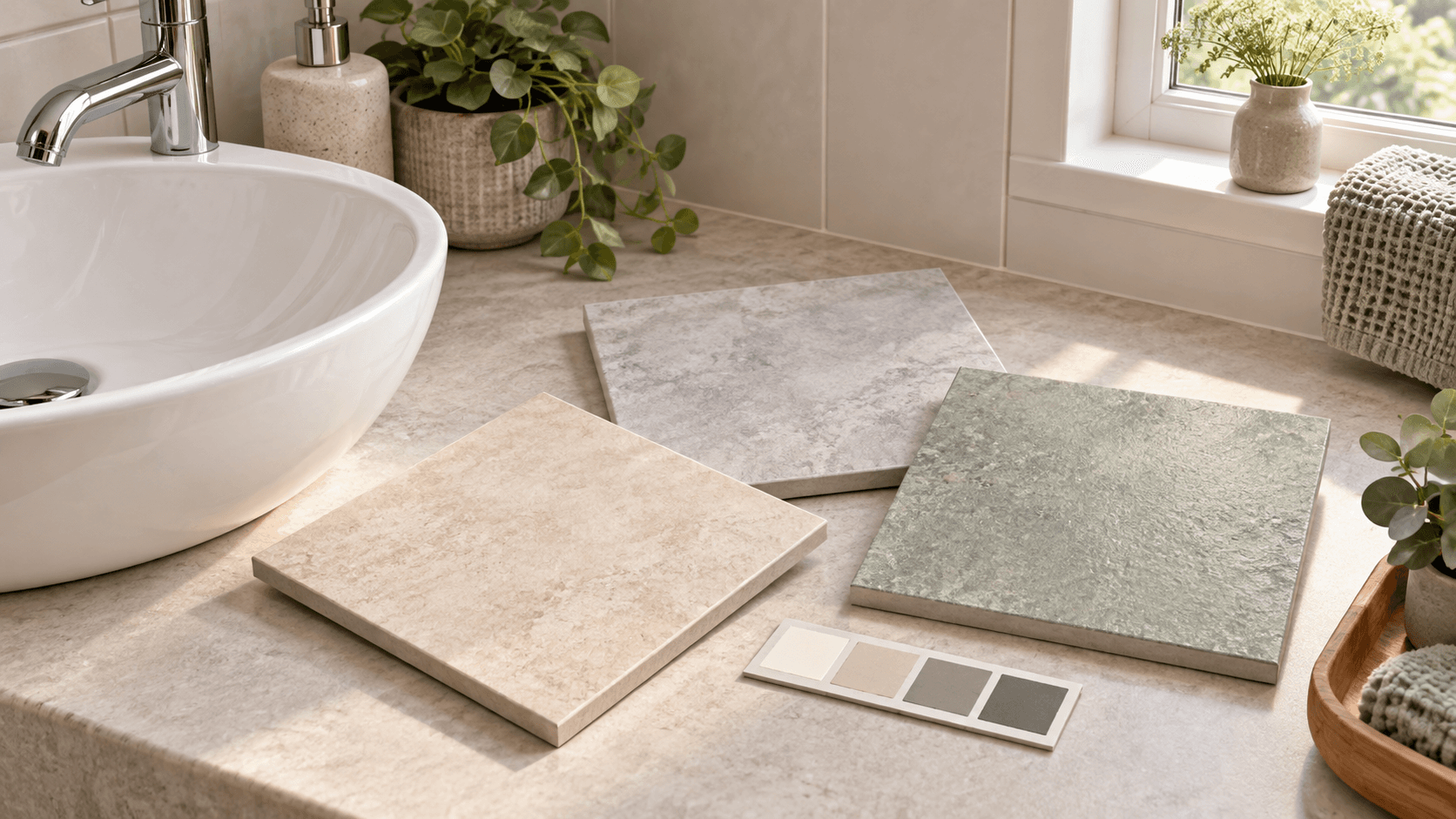
Large-format tiles look calmer and mean fewer grout lines, which is why they are so popular. They are also far less forgiving of an uneven surface, because a large rigid tile cannot follow a wall that undulates and will either sit proud at one corner or need packing behind it.
That means a wall which would have been acceptable for small tiles may need genuine preparation before large ones can go on it. It is a legitimate cost rather than an upsell, and it is better identified at quotation than discovered at fixing.
Layout also changes with size. Larger tiles mean fewer, more visible cuts, so setting out matters more: where the cuts fall, how they relate to fittings and corners, and whether a small awkward sliver can be designed out by shifting the starting point.
Trims and edges belong in the same conversation, because how a tiled surface finishes at a corner, a window reveal or an unfinished edge is one of the clearest differences between careful and careless work.
- Large tiles need flatter walls than small tiles do.
- Setting out decides where cuts fall; ask where they will be.
- Design out awkward slivers before fixing rather than after.
- Agree trims and edge details as part of the specification.
Grout and sealant do different jobs
Grout fills the joints between tiles on the same plane and is essentially rigid. Sealant fills the junctions where two different surfaces meet, such as tile to bath, tile to tray or wall to floor, and is flexible because those junctions move.
Putting grout where sealant belongs is the reason so many baths have a cracked line along the top edge. A bath flexes when it fills with water and a person, and rigid grout cannot absorb that: it cracks, then it lets water in.
Black sealant is usually a ventilation problem rather than a sealant problem. Mould grows where surfaces stay damp, so a bathroom that cannot clear its moisture will discolour its sealant however good the product was.
Fylde Bathrooms treats grout choice and waterproofing as part of the tiling specification, and where more than one sensible option exists the trade-off can be shown before materials, access or dates are agreed.
Related pages
Questions customers ask
Can I tile over existing tiles?
Sometimes, if the existing tiles are thoroughly sound, well bonded and the added thickness does not cause problems at fittings and thresholds. It is often a false economy, because you inherit whatever is behind them and any weakness travels through.
Why do my bathroom floor tiles keep cracking?
Almost always floor movement. A timber floor that deflects slightly underfoot will crack rigid tiles over time. The fix is stiffening the deck or using an uncoupling layer, decided before tiling rather than after the first crack.
Why has the sealant around my bath gone black?
Usually ventilation. Mould grows where surfaces stay damp, so a bathroom that cannot clear its moisture will discolour sealant regardless of the product used. Replacing it without improving extraction generally produces the same result again.
Tile onto something stable, stiffen anything that moves, prepare harder for larger tiles, and put sealant where surfaces meet rather than grout. That is the whole difference between tiling that lasts and tiling that gets redone.
Fylde Bathrooms prepares and tiles bathrooms in Cleveleys with the substrate settled before anything is fixed. The contact page is the place to start.