Older coastal houses make beautiful bathrooms and demanding plumbing jobs. Behind the tiling sits whatever four or five generations of owners thought was a good idea at the time, and the refit inherits every one of those decisions.
Fylde Bathrooms plumbs bathrooms across Lytham St Annes, and these are the realities worth knowing before a period bathroom is opened up.
Pipework from several eras at once
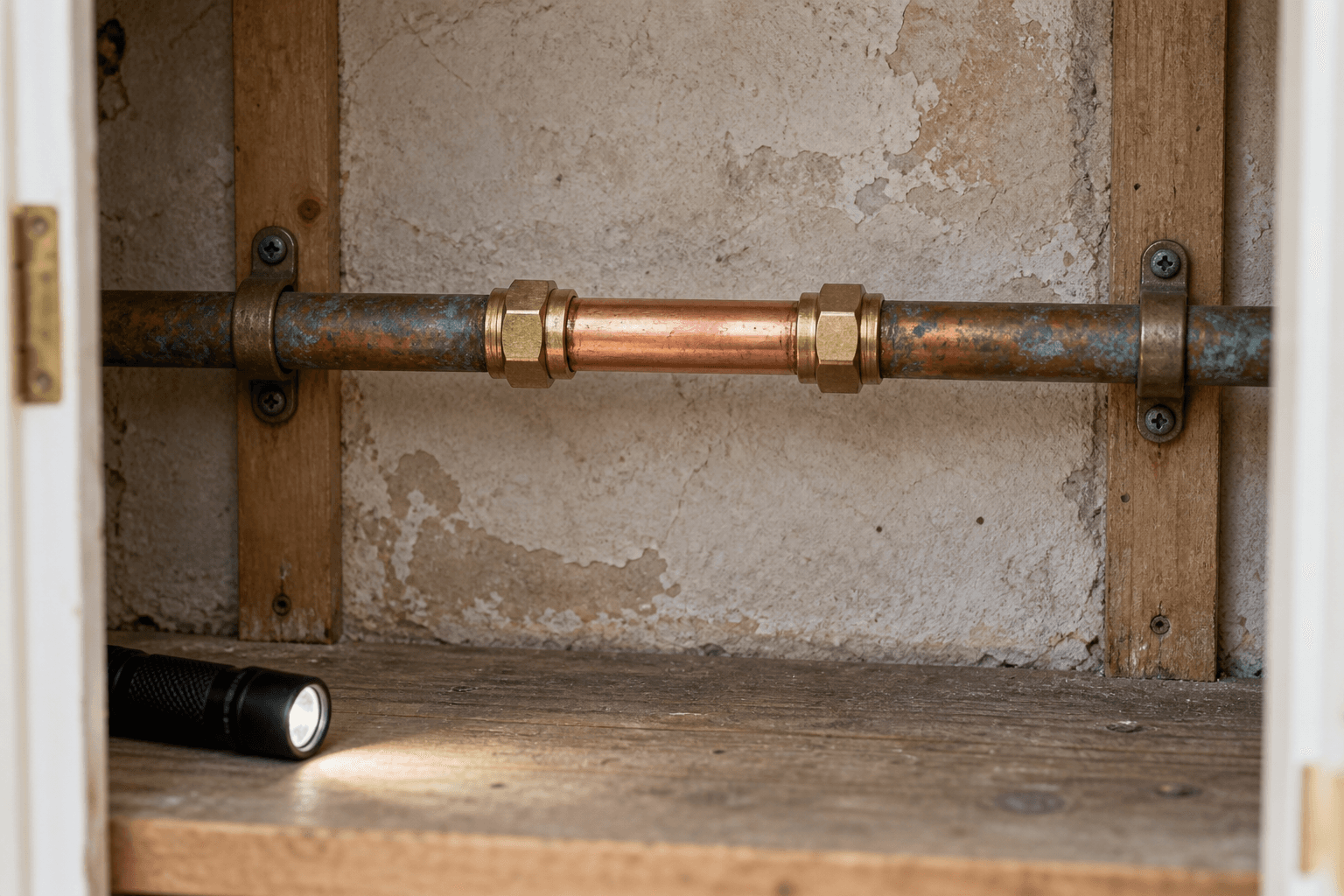
A period house frequently contains lead-era remnants, mid-century copper, later microbore and modern plastic, joined by whatever fittings were to hand. The joins between eras are where trouble concentrates, because dissimilar systems were often married optimistically rather than correctly.
The practical consequence is that a bathroom refit in an old house is partly a pipework renewal: sections replaced back to sound material rather than patched, and improvised junctions corrected while the floor is up. Pricing that honestly at survey is the difference between a quote and a surprise.
- Expect several pipe eras behind one wall.
- Era junctions are where failures cluster.
- Renewal back to sound material beats patching.
Pressure and flow that need measuring
Period properties often run gravity-fed hot water from a loft tank, which delivers pressure proportional to height and disappoints on upper floors. Others have been converted piecemeal, leaving a mixture where hot and cold arrive at different pressures and mixer showers behave unpredictably.
Measuring pressure and flow before specifying a shower is the only way to avoid the commonest complaint in bathroom fitting: a beautiful new shower that dribbles. The measurement takes minutes and steers the whole specification.
- Gravity systems limit upper-floor performance.
- Mixed pressure hot and cold upsets mixer showers.
- Measure before choosing the shower.
Waste runs added over decades
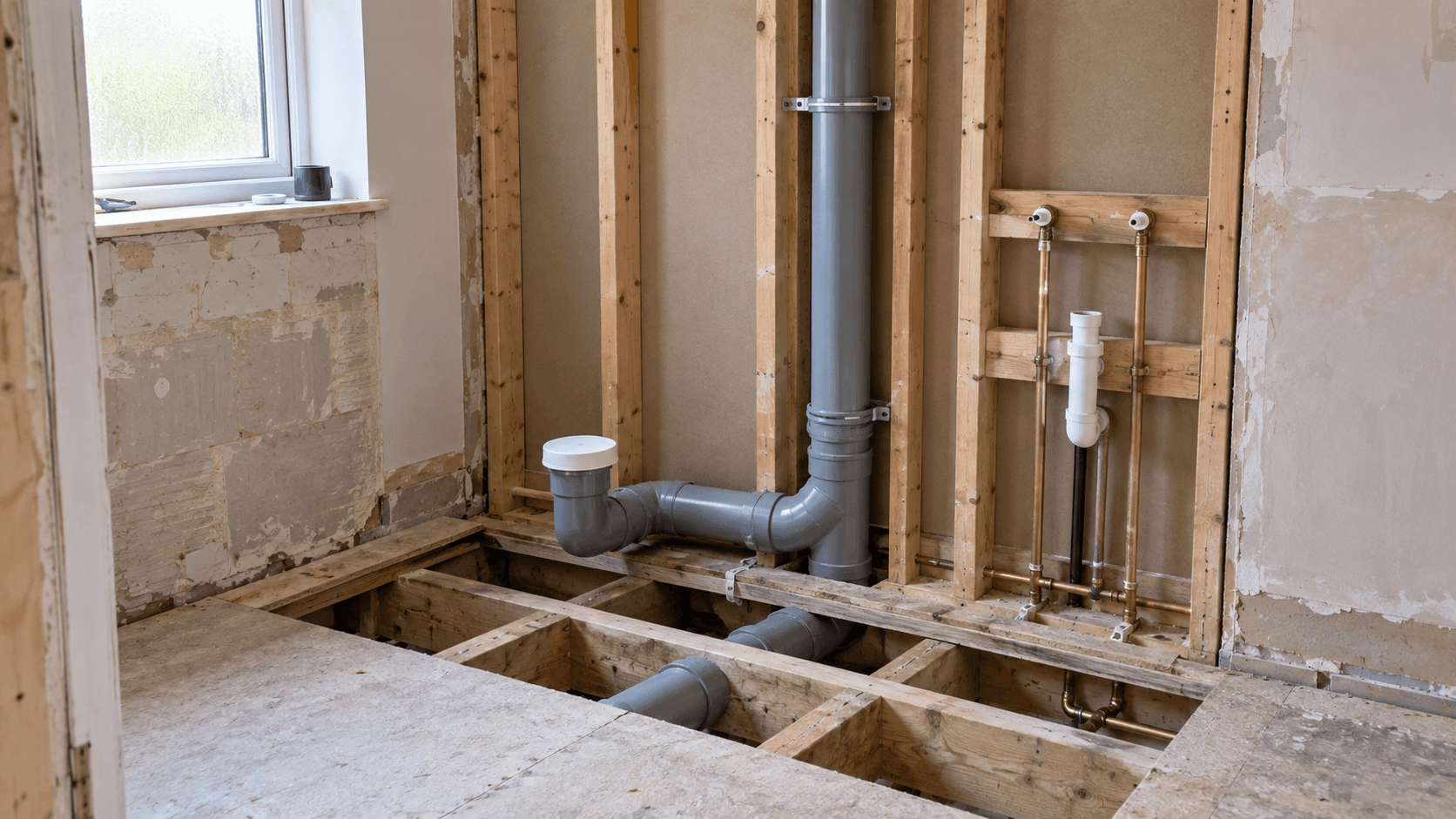
Bathrooms in older houses were often added to rooms never designed for them, which means waste runs that travel long distances at marginal fall, sometimes through cupboards and along external walls. Those runs work until anything moves, and they constrain where fittings can go in a refit.
Tracing them before design is essential: it decides whether the layout you want is a straightforward change or a floor-up project. Fylde Bathrooms establishes the existing waste route at survey for exactly that reason.
Salt air and the survey questions
Coastal air is unkind to metalwork: exposed fixings, radiator valves and external pipework corrode faster here than inland, so specification favours corrosion-resistant fittings and any external runs get insulated and protected properly.
The survey questions that prevent mid-job surprises are short: what is the hot water system, where does the waste actually run, what is behind the tiling, and has anything leaked here before? Honest answers to those four turn an old-house bathroom from a gamble into a plan.
Related pages
Questions customers ask
Why is plumbing in an older house more expensive?
Because the refit usually includes renewing mixed-era pipework and correcting improvised junctions found on opening up. That work is real, and honest quotes flag the likelihood at survey.
Why does my new shower have poor pressure?
Usually a gravity-fed hot supply, or hot and cold arriving at different pressures. Measuring both before specifying the shower prevents the disappointment entirely.
Can bathroom fittings be moved in a period house?
Often, but the existing waste route decides how easily. Long runs at marginal fall constrain movement, which is why the route is traced before the layout is finalised.
Expect mixed eras, measure the pressure, trace the waste, specify for salt air, and ask the four survey questions. Old coastal houses reward that preparation with excellent bathrooms.
Fylde Bathrooms surveys and plumbs across Lytham St Annes. The contact page starts with the room.