A leak is the one household problem where the first ten minutes belong entirely to you. Whatever happens afterwards, the amount of damage is largely settled by whether the water was stopped and where it was allowed to go.
Fylde Bathrooms handles plumbing across Blackpool, and this is the short version worth knowing before you need it: isolate, contain, work out which system it is on, and describe it accurately.
Isolate first, in the right order
The first question on any plumbing fault is whether the water can be isolated, and the more local the isolation, the less of the house you lose while it is being fixed.
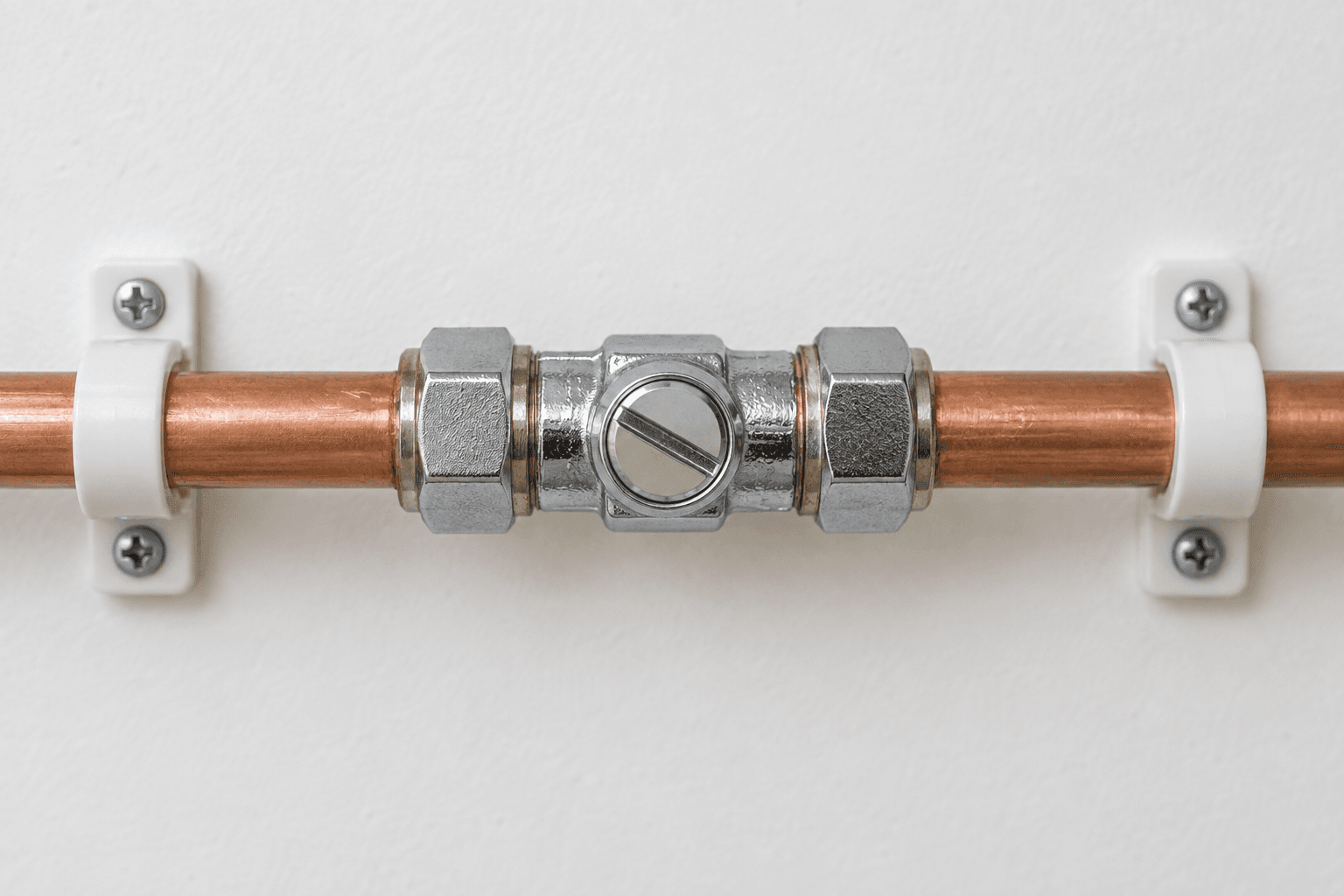
Start with the fixture. Many basins, toilets and appliances have their own isolation valve on the supply below or behind them, and closing that stops the leak while everything else keeps working. If there is no local valve, or it will not turn, the next step is the internal stop tap.
Once the water is off, open the cold taps. That drains what is left in the pipework instead of leaving it to find a ceiling. If the leak is on the heating rather than the mains, the relevant isolation is different again and the boiler pressure gauge is the thing to watch.
Find your stop tap now rather than during an emergency, and turn it off and on once to check it is not seized. A seized stop tap discovered mid-leak is the worst version of a small problem.
- Try the fixture's own isolation valve before the whole-house stop tap.
- Open the cold taps once the water is off to drain the pipework.
- Keep electrics well away from any water.
- Locate and test your stop tap on an ordinary day, not during a leak.
Which system is it on?
A damp patch looks identical whether the water came from a mains supply, a waste pipe or the heating, and the three are traced completely differently. Two simple observations usually separate them.
If the property is metered, turn off every tap and appliance, note the meter reading including the finest digits, and check it again an hour or two later with nothing used. Movement confirms a supply-side leak.
If the boiler pressure gauge is falling steadily over days or weeks, the heating system is losing water. A sealed system should hold its pressure for months, so regular topping up is a finding rather than a maintenance habit.
If neither of those shows anything, the likely candidate is a waste: water that only appears when a particular fixture is used, rather than continuously, is behaving like a waste leak rather than a supply one.
Describe it so the first visit is the repair
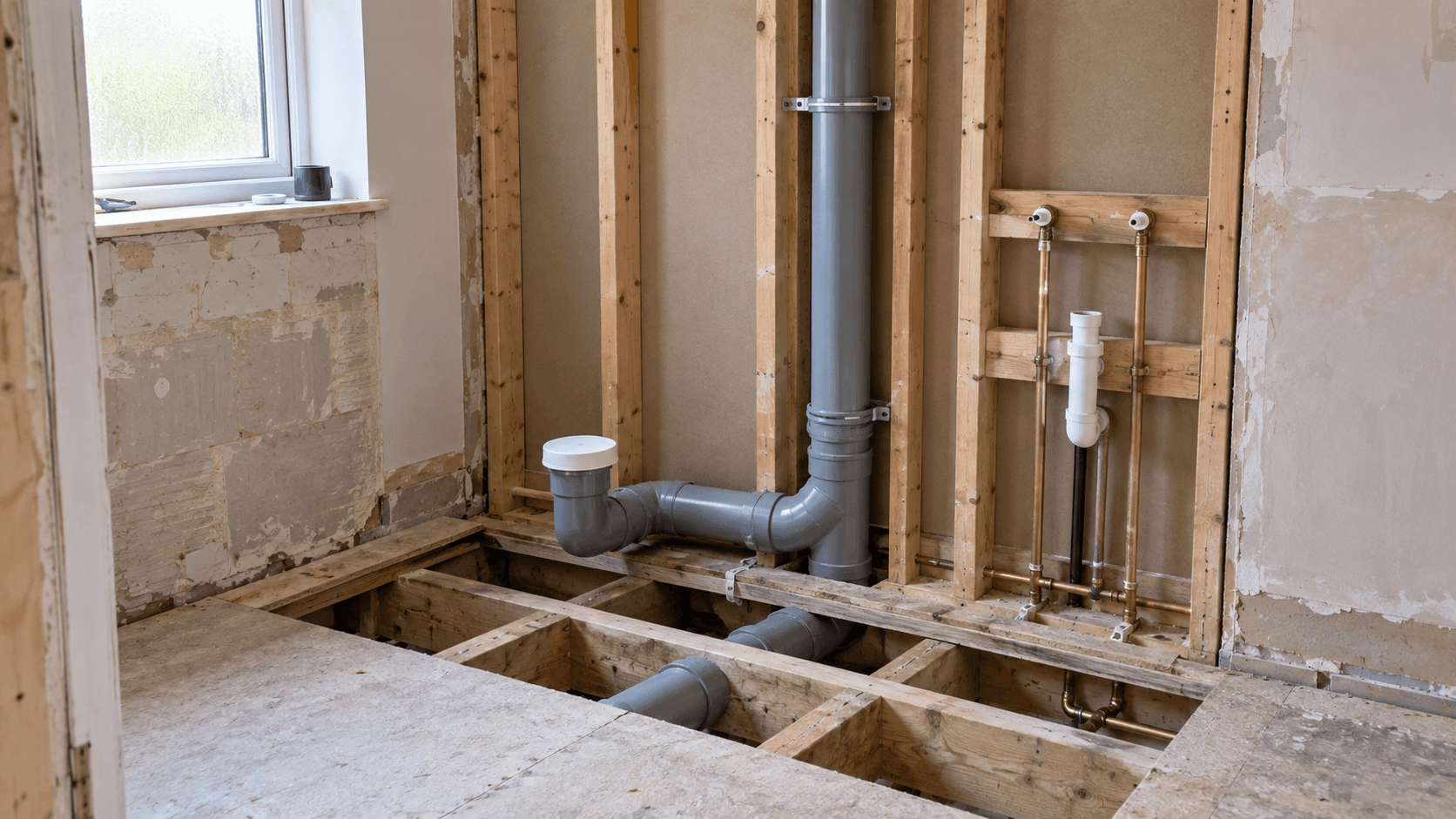
Plumbing work starts with where the fault is showing, whether water can be isolated, what the visible pipework looks like, any ceiling or wall damage, access limits, the fixture type and whether the job is a repair or an investigation. Every one of those is something you can report before anyone arrives.
Photographs do most of the work. A picture of where the water is appearing, of the pipework and fixture involved, and of any isolation valves usually answers more questions than a paragraph of description, and it means the right parts get carried.
Pattern matters as much as appearance. Does it leak constantly, or only when a particular tap runs, or only after a shower? Is the damp patch growing, static or drying? Photograph it once and again a few days later, because that comparison cannot be recovered afterwards.
Say plainly whether it is getting worse. That single sentence changes how a call is prioritised more than any adjective.
- Photograph the leak, the pipework and the isolation valves.
- Say whether it leaks constantly or only with a particular fixture.
- Note whether the damp patch is growing, static or drying.
- State any access limits before the visit rather than at the door.
Repair, or investigation?
These are two different jobs and it helps to know which one you are booking. A visible drip at a known fitting is a repair: the fault is identified and the visit fixes it. Water appearing in a ceiling with no obvious source is an investigation first, and a repair second.
Investigations are worth doing properly rather than quickly. Opening walls and floors speculatively to chase a leak causes damage that often costs more than the repair itself, so narrowing the source before anything is cut is the cheaper route even when it feels slower.
Fylde Bathrooms triages plumbing work on exactly those terms, keeping the recommendation practical where access or the existing condition affects what the work involves.
Where a leak turns out to be a symptom of a tired bathroom rather than a single failed fitting, it is worth knowing that too, because repeated small repairs on failing sealant and old pipework eventually cost more than dealing with the room.
Related pages
Questions customers ask
How do I know if a leak is on the heating system?
Watch the boiler pressure gauge over days and weeks. A sealed system holds its pressure for months, so a steady fall means the heating side is losing water. That changes the whole search, because heating and supply leaks are traced differently.
What if I cannot find where the water is coming from?
That is an investigation rather than a repair, and it should be narrowed down before anything is opened up. Speculative cutting into walls and ceilings usually costs more in making good than the repair itself.
What should I do before a plumber arrives?
Isolate the water as locally as you can, open the cold taps to drain down, keep electrics away, photograph what is happening and note whether it is getting worse. Those actions limit more damage than any arrival time.
Isolate as locally as you can, drain the pipework, work out which system is losing water, then photograph and describe it. Those four steps decide how much the leak costs you.
Fylde Bathrooms handles plumbing repairs and investigations across Blackpool. The contact page is the place to send the photographs.