There is a particular household ritual that repeats every couple of years: wipe the mould off the ceiling, cut out the black sealant, repaint, and feel that the problem is solved. Then the following winter it comes back in exactly the same places.
Fylde Bathrooms fits bathrooms across Fleetwood, and condensation is the most common complaint about rooms that were otherwise finished perfectly well. The reason it returns is that cleaning treats the symptom, and the cause is that the moisture never leaves.
Where the water actually comes from
A single shower puts a surprising amount of water into the air of a small room. That moisture does not vanish: it condenses on whatever is coldest, which is why mould appears on ceilings, in corners, on window reveals and along the cold line where a wall meets an outside wall.
That pattern is diagnostic. Mould that follows cold spots is a condensation problem. Mould in a single localised patch with no obvious cold surface behind it is more likely a leak, and it should be investigated rather than repainted.
The three variables are how much moisture is produced, how quickly it is removed, and how cold the surfaces are. You can only really influence the second and third, which is why extraction and insulation matter more than anything you can buy in a bottle.
Cleaning has its place, but a room where the moisture never leaves will regrow whatever you remove, on roughly the same timetable each year.
- Mould along cold surfaces and corners indicates condensation.
- A single isolated patch may be a leak, not condensation.
- You can control removal speed and surface temperature, not much else.
- Cleaning without changing the cause resets the same cycle.
What an extractor fan has to do to be useful
Most bathroom fans that do not work are not broken. They are simply not doing enough, or what they move is not going anywhere.
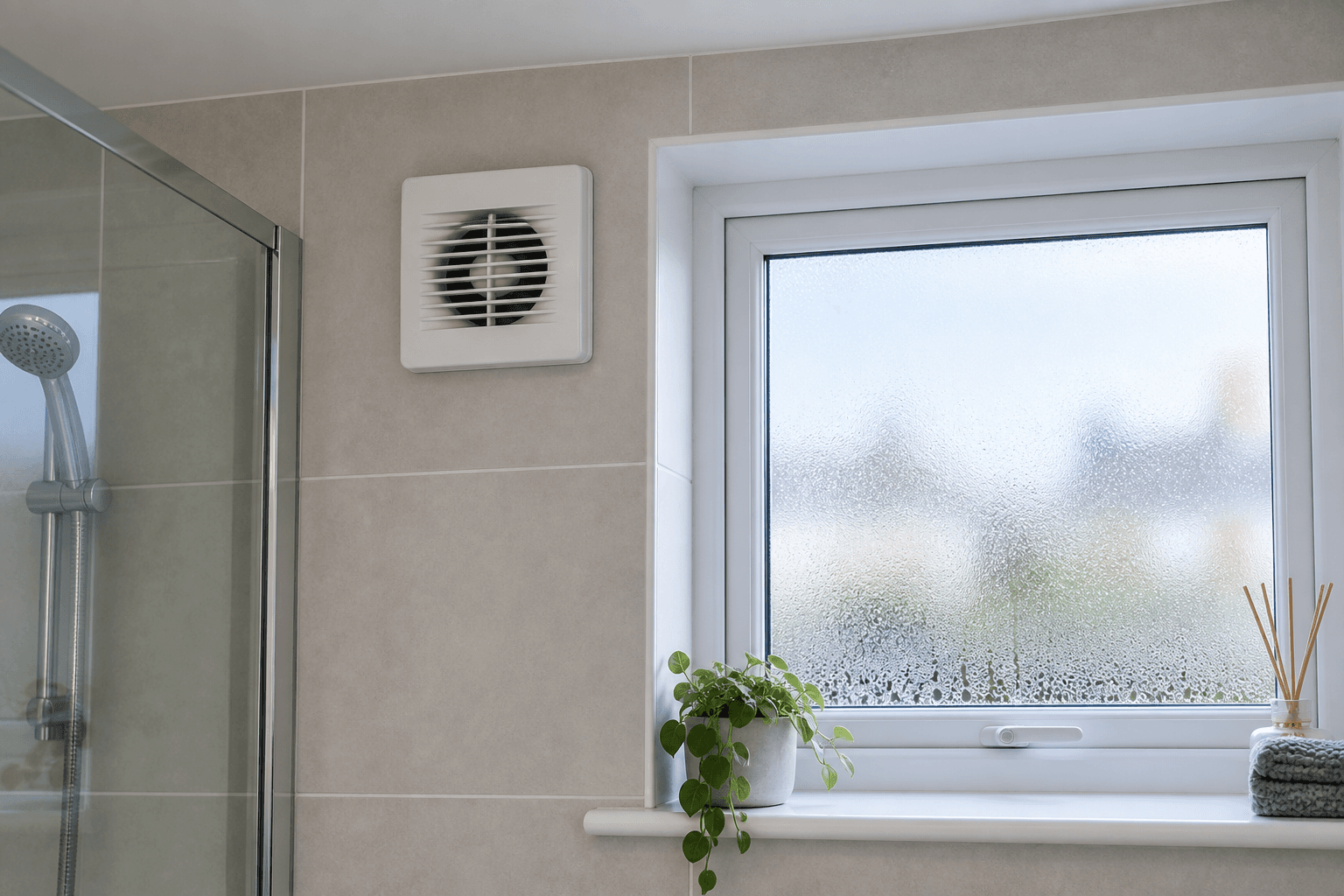
Three things decide whether a fan is worth having. It has to be sized for the room rather than being whatever fitted the hole. It has to duct to outside, in as short and straight a run as possible: long, crushed or sagging flexible ducting cripples the airflow, and ducting into a loft or void moves the damp problem somewhere you cannot see it.
And it has to run long enough. A fan wired to the light switch stops the moment you leave, which is precisely when the room is at its wettest. A run-on timer, giving it several minutes after the light goes off, is what actually clears the air.
Air also has to get in for air to get out. A tightly sealed door with no gap underneath starves the fan, and a fan that cannot draw replacement air moves far less than its label suggests.
Why an open window is not the answer
Opening a window helps, and in summer it may be enough. In winter it is unreliable, because nobody leaves a bathroom window open in January for long enough to clear the room, and cold air entering makes the surfaces colder, which is half of the original problem.
There is also the sequencing issue. Moisture condenses within minutes of a shower, and by the time somebody remembers to open the window it has already landed on the ceiling and the reveals. Extraction that runs automatically does not depend on anybody remembering.
That said, a habit or two genuinely helps: closing the bathroom door while showering and while the fan runs on keeps the moisture in the room where it can be extracted, rather than distributing it around the rest of the house to condense on colder surfaces elsewhere.
Wiping the screen and tiles down after a shower removes a real proportion of the water before it can evaporate again. It is unglamorous and it works.
- Keep the bathroom door closed while showering and while the fan runs on.
- Wipe down the screen and tiles; it removes water before it evaporates.
- Do not rely on a window in winter, when the problem is worst.
- Leave a gap under the door so the fan can draw replacement air.
The fixes that end the cycle
If mould keeps returning, the fix is nearly always a combination rather than one item. A correctly sized fan, ducted properly to outside with a run-on timer, is the foundation and can usually be retrofitted without redoing the room.
Warming the coldest surfaces is the other half. A heated towel rail or radiator that actually heats the room, rather than just warming a towel, raises surface temperatures enough to stop condensation forming in the worst corners. Where an external wall is the cold spot, insulation is the real answer.
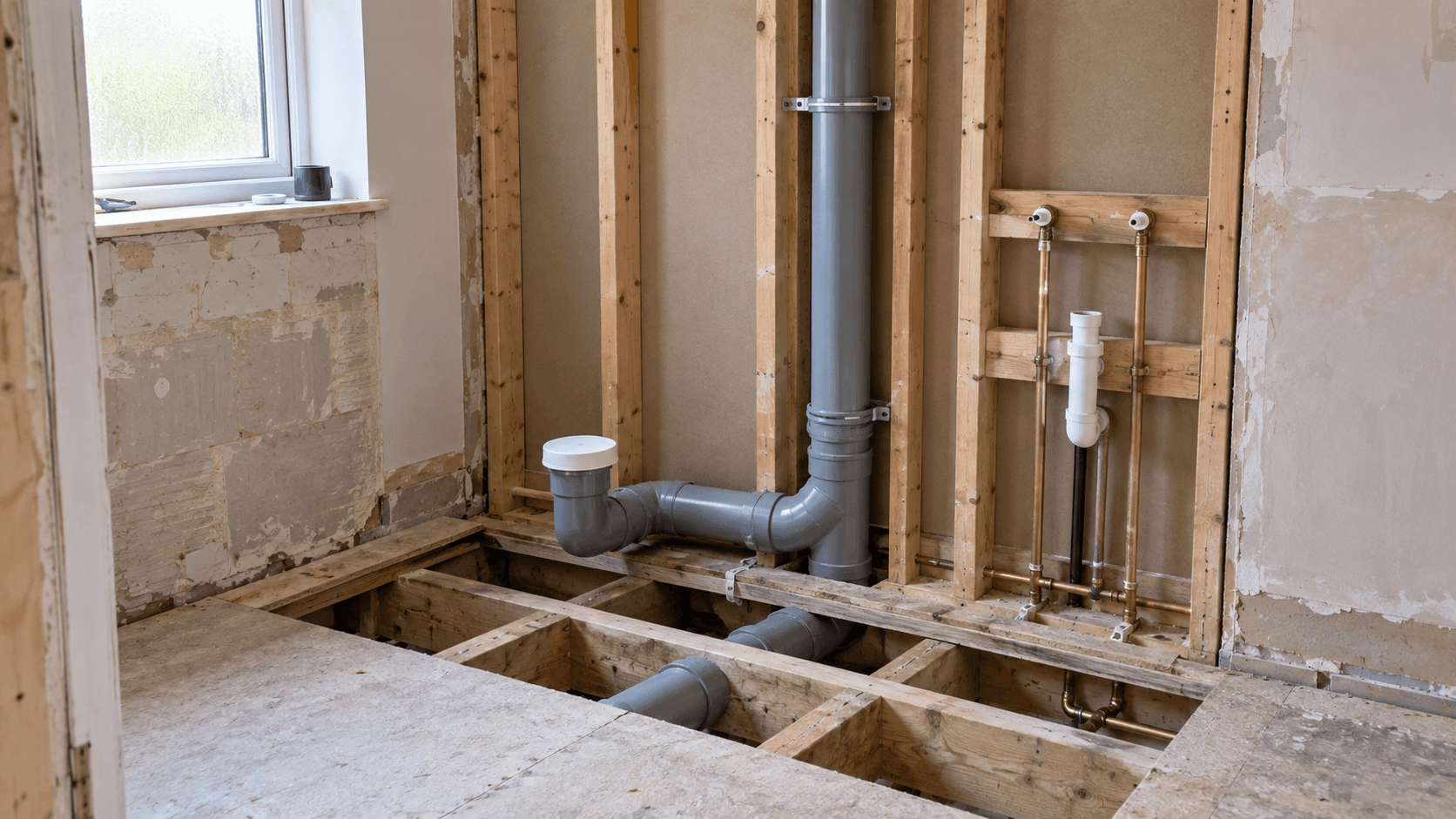
Where the room is being fitted or renovated anyway, all of this belongs in the specification alongside ventilation, waterproofing and fixture choices, because the duct route and the fan position are far easier to sort while the walls are open.
Fylde Bathrooms includes ventilation in the bathroom fitting conversation for exactly that reason, and a room that keeps growing mould is worth mentioning at the enquiry, because it changes what the new room needs to include.
Related pages
Questions customers ask
Why does mould keep coming back after I clean it?
Because cleaning removes the growth but not the conditions. If moisture is still condensing on the same cold surfaces, it will regrow on the same timetable. The cure is faster extraction and warmer surfaces rather than stronger cleaning products.
Is my extractor fan good enough?
Check three things: whether it is sized for the room, whether it ducts to outside by a short, straight route, and whether it runs on after the light goes off. A fan failing any of those does much less than people assume it does.
Can I just open the window instead?
In summer, often. In winter, no. Nobody leaves a bathroom window open long enough in cold weather, and incoming cold air lowers surface temperatures, which is half of what causes the condensation in the first place.
Get the moisture out faster and keep the cold surfaces warmer. A correctly sized fan ducted outside with a run-on timer, a door kept shut, and heat in the room will end a cycle that cleaning never will.
Fylde Bathrooms treats ventilation as part of fitting bathrooms in Fleetwood rather than an afterthought. The contact page is the place to describe where the mould appears.