
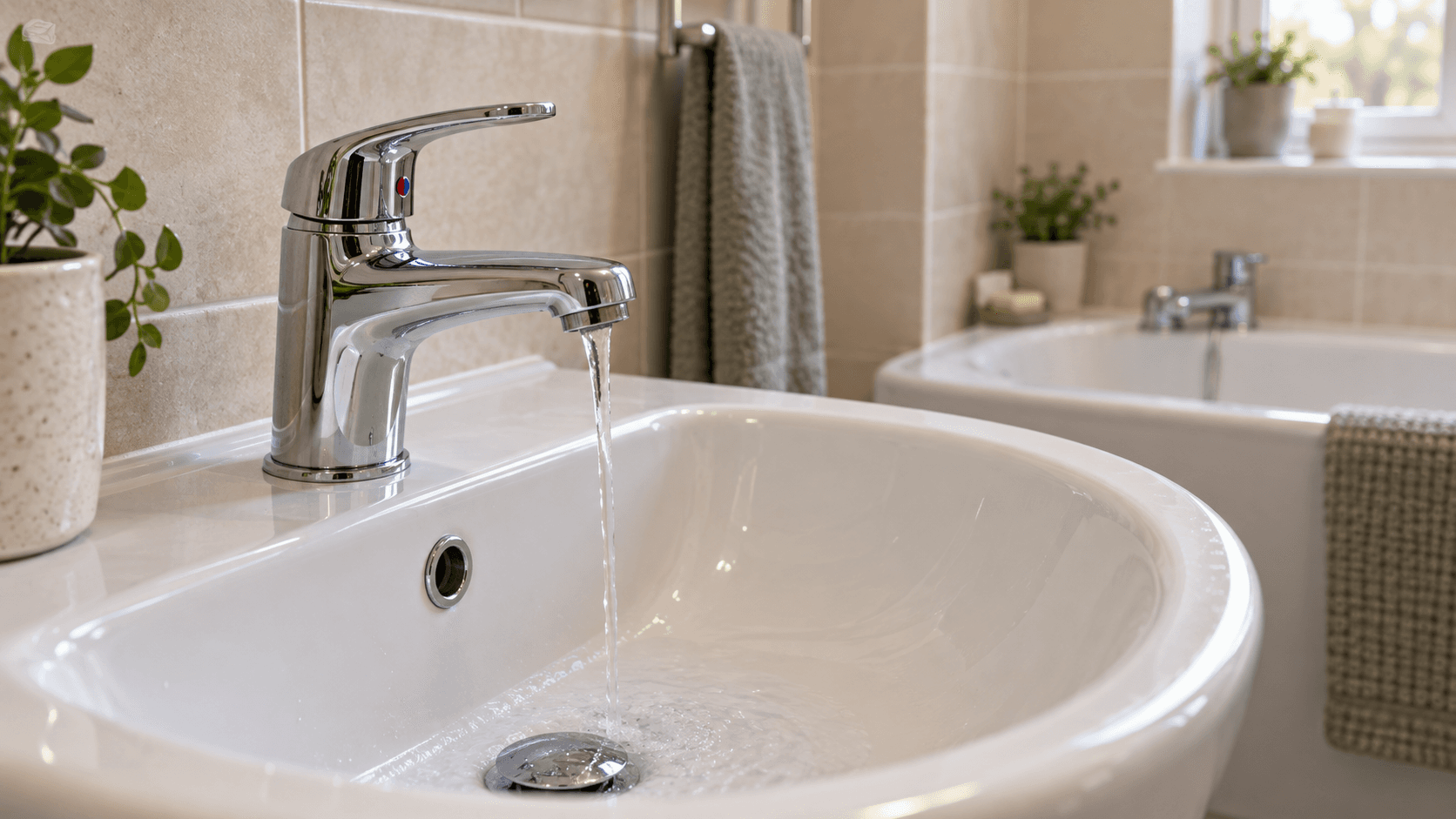
The most disappointing moment in a bathroom project is not a delay or an overspend. It is the first shower, when a fixture that looked magnificent in a showroom produces something closer to a warm drizzle, and nobody can quite explain why.
The explanation is almost always pressure. Fylde Bathrooms fits bathrooms across Blackpool, and this is the conversation worth having before fixtures are chosen rather than after they are installed.
What your property actually delivers
Water pressure and flow rate are not the same thing, and both matter. Pressure is the force behind the water; flow rate is how much of it arrives per minute. A fixture can be starved by either.
A property fed directly from the mains generally delivers higher pressure, which is why combi and unvented systems support fixtures that a gravity system cannot. A traditional system fed from a tank in the loft delivers pressure based on the height of that tank above the outlet, which is why the upstairs shower is so often the weakest one in the house.
Measuring flow takes a couple of minutes with a jug and a timer at the relevant tap. Knowing the system type takes a look at whether there is a cylinder and a tank. Between them, those two facts eliminate most of the fixtures that would have disappointed you.
This belongs at the start of the process. Water pressure is one of the things bathroom fitting has to establish along with room layout, waste routes, ventilation, fixture choices and access needs.
- Pressure and flow rate are different; check both.
- Look for a cylinder and a loft tank: that tells you the system type.
- On gravity systems, the higher the outlet, the weaker it is.
- Measure at the actual tap, not at the kitchen cold tap.
The fixtures that need real pressure
Some fixtures are effectively pressure-dependent by design. Large rainfall shower heads spread water over a wide area, which needs volume behind it: on a low-flow system the result is a gentle sprinkle rather than the drenching in the photograph.
Thermostatic and digital shower valves usually specify a minimum operating pressure, and below it they may not hold temperature reliably, which is a comfort issue and a safety one. Body jets multiply the demand, since every outlet is taking from the same supply.
Some taps are the same story in miniature. Slim spouts and certain designer mixers rely on pressure for their flow pattern, and on a gravity system they can trickle rather than run.
None of this makes those fixtures wrong. It makes them conditional, and the condition is printed in their own specification. Reading it before ordering is the whole trick.
What works well on a low-pressure system
Plenty of excellent fixtures are designed for gravity systems and perform beautifully on them. Low-pressure taps, shower heads designed to concentrate rather than spread the flow, and valves rated for low operating pressures all exist precisely for these properties.
There are also ways to change the supply rather than the fixture. A pump can lift a gravity system's performance, an unvented cylinder converts stored water to mains pressure where the incoming supply supports it, and in some properties a different appliance type solves the problem at source.
Each of those is a real project with a real cost, so the honest comparison is between changing the fixture and changing the system. Where there is more than one sensible option, the quote can show the trade-off clearly before materials, access or dates are agreed.
The wrong outcome is to install a high-demand fixture on a low-pressure supply and hope. That combination cannot be improved by better fitting, because nothing in the installation is at fault.
- Low-pressure-rated taps and shower heads genuinely work well.
- Concentrated shower heads beat wide rainfall heads on low flow.
- A pump or a system change is a real alternative, priced as such.
- Check the minimum pressure in the fixture's own specification.
Getting the answer before you order
The practical sequence is short. Establish the system type, measure the flow at the outlet that matters, then check the specification of any fixture you are drawn to against those two numbers.
If you are choosing from a showroom or online, take the pressure question with you rather than leaving it to be discovered. It narrows the choice usefully rather than restricting it, and it removes the single most common cause of regret in a finished bathroom.
Fylde Bathrooms will raise water pressure as part of the fitting conversation alongside layout, waste routes and ventilation, and it is worth mentioning at the enquiry if you have already bought anything, because that changes what the job has to accommodate.
Room photographs, rough dimensions and the fixtures you are considering are enough for a first, genuinely useful answer on whether they will perform in your property.
Related pages
Questions customers ask
Why is my new shower weaker than the old one?
Usually because the new fixture needs more pressure or flow than the property provides. A wide rainfall head in particular spreads a limited flow over a large area. It is a compatibility issue rather than a fitting fault, which is why it should be checked before ordering.
How do I find out what pressure I have?
Establish the system type first: a cylinder and a loft tank means gravity-fed, while a combi or unvented cylinder means mains pressure. Then measure the flow at the relevant outlet with a jug and a timer. Those two facts settle most fixture questions.
Can a pump fix a weak shower?
On a gravity-fed system a pump often can, and on some properties converting the hot-water arrangement is the better answer. Both are real projects with real costs, so they should be compared against simply choosing a fixture designed for lower pressure.
Find out what the property delivers, read the minimum pressure in the fixture's own specification, then choose. Doing it in that order removes the most common regret in a finished bathroom.
Fylde Bathrooms raises the pressure question early on bathrooms in Blackpool, before anything is ordered. The contact page is the place to describe your system.