
In a house with two bathrooms, a bathroom project is a building job. In a house with one, it is a domestic logistics exercise with a building job attached, and the question everybody actually wants answered is how many days they cannot use the toilet.
Fylde Bathrooms fits bathrooms across Lytham St Annes, and this is the honest version of that answer: what causes the disruption, how it can be shortened, and what to arrange before anyone starts.
Which stages actually take the room out of use
A bathroom project is not uniformly disruptive. Most of the days are ones where the room is a building site but the household is coping; a smaller number are the ones where nothing in it works at all.
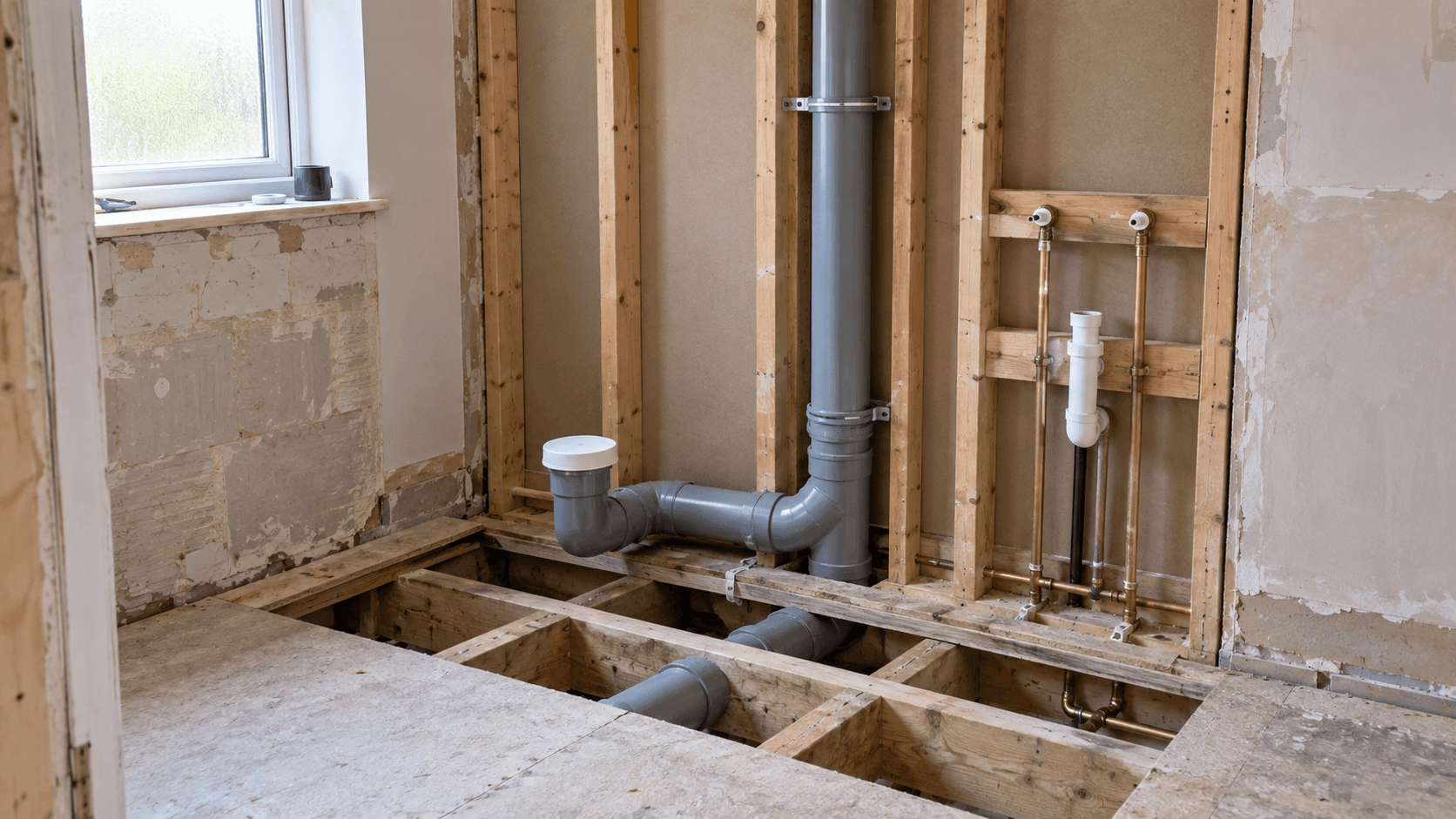
Strip-out is the obvious one: once the suite is out, there is no toilet. First fix follows, where pipework is altered and wastes are re-routed, and the room stays out of use throughout. Then comes preparation of walls and floors, which is often the longest stage and the least visible.
The toilet can frequently be reinstated earlier than the rest, and that single decision changes the experience of the whole job more than anything else. It is worth asking specifically whether it can go back before tiling rather than after.
Tiling, grouting and sealing then need time to cure, and rushing them is how a bathroom fails early. The shower is usually the last thing available, because it depends on everything behind it being finished and sealed.
- Strip-out and first fix are the genuinely unusable days.
- Wall and floor preparation is the longest and least visible stage.
- Ask whether the toilet can be reinstated before tiling.
- Curing and sealing time is not padding; rushing it shortens the room's life.
Ask for the number, and what would change it
The useful question is not how long the job takes. It is how many days there will be no usable toilet, and how many days no usable shower. Those are different numbers and both matter.
Then ask what would extend them. The honest answers are usually a short list: something found at strip-out, a fixture arriving late or wrong, a decision that has not been made, or a stage that cannot proceed until something else has cured.
Of those, the two you control are decisions and materials. Having every fixture chosen and on site before strip-out removes the most common cause of a stalled bathroom, and being reachable during the first two days removes the second.
Where there is more than one sensible option, the trade-off can be shown clearly before materials, access or dates are agreed. That applies to programme as much as to price, and it is fair to ask for it in those terms.
Practical arrangements worth making
A little planning turns the unusable days from a crisis into an inconvenience. Arrange somewhere to shower: family, a neighbour, a gym, or a workplace. Do it before the job rather than on the morning it becomes necessary.
Move everything out of the room in advance, including the contents of cabinets, and find a temporary home for the things you use daily. Set aside towels, toiletries and medication somewhere accessible rather than packed away.
Agree how the site will be left each evening, and whether there is a route through the house that needs protecting. Where access is tight, agree where materials will be stacked and where waste will go, because a first-floor bathroom means everything travels the stairs twice.
Fylde Bathrooms plans fitting work around access needs and how the room is used day to day, and a one-bathroom household is exactly the case where that planning is worth doing explicitly.
- Arrange somewhere to shower before the job starts.
- Empty the room completely, including cabinet contents.
- Keep daily essentials accessible rather than boxed.
- Agree the material route, waste storage and how the site is left overnight.
Where staging genuinely helps
Some projects can be staged so the room is out of use for less time overall, and it is worth asking whether yours is one. Doing preparation work that does not require the suite to be out first, or ordering long-lead items before strip-out, both shorten the unusable window.
Conversely, some economies extend it. Splitting the job across two visits weeks apart, or deferring a decision until the room is already stripped, both mean more days without a bathroom rather than fewer.
There is also an argument for scope. If a second toilet could be added elsewhere in the property, even a compact cloakroom, the calculation changes permanently rather than just for this project. It is worth at least asking whether the drainage would allow it.
Room photographs, approximate dimensions, fixture choices and any access requirements sent early let all of this be planned properly rather than improvised on the first morning.
Related pages
Questions customers ask
How many days will I have no toilet?
Fewer than the length of the job, and often far fewer if the toilet can be reinstated before tiling. Ask specifically for the number of days without a usable toilet and without a usable shower, because they are different answers.
What most often extends a bathroom project?
Something found at strip-out, a fixture arriving late or wrong, or a decision that has not been made. The last two are within your control: have everything chosen and on site beforehand, and be reachable during the first two days.
Can the work be staged to reduce the disruption?
Sometimes. Preparation that does not need the suite removed can happen first, and long-lead items can be ordered before strip-out. Splitting the job across visits weeks apart usually has the opposite effect.
Ask for two numbers rather than one, get every fixture on site before strip-out, arrange a shower elsewhere, and find out whether the toilet can go back early. That is the difference between a hard fortnight and a manageable one.
Fylde Bathrooms plans bathroom fitting in Lytham St Annes around how the room is actually used. The contact page is the place to start.