Every bathroom quote comes with a number of days attached, and the number is often the least examined part of the document. It is worth examining, because a timescale that has not allowed for drying, curing and the arrival of materials is not a plan; it is an aspiration.
Fylde Bathrooms fits bathrooms across Preston, and this is what the sequence actually contains, so you can tell a credible programme from an optimistic one.
The sequence, and why it cannot be reordered
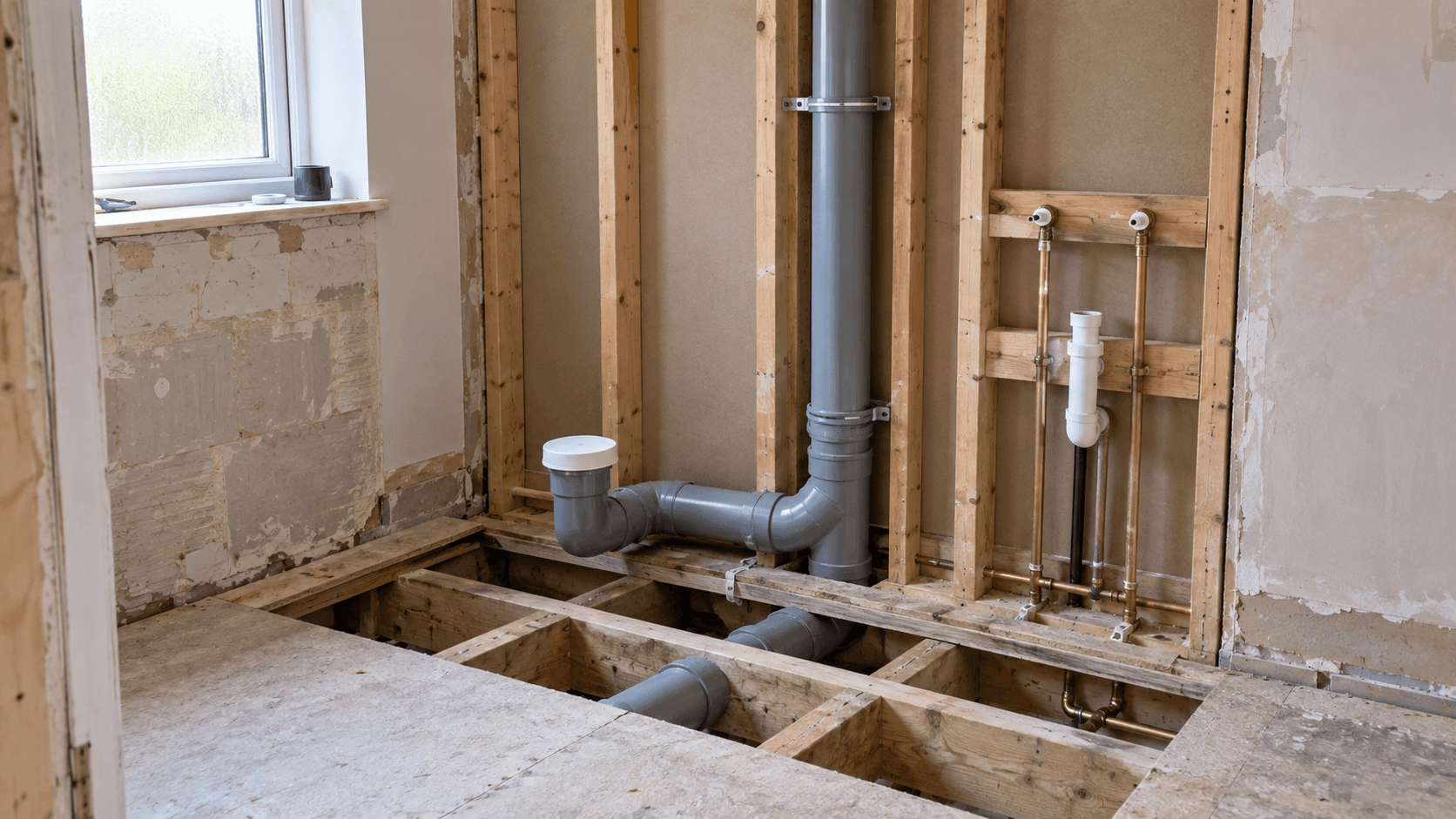
A bathroom runs in a fixed order because each stage depends on the one before it. Strip-out first. Then first fix, where pipework and any electrical cabling are altered and positioned. Then boarding and preparation of walls and floor.
Then waterproofing where it is needed, then tiling, then grouting, then second fix, where the fixtures go in and get connected, and finally sealing and finishing.
There is no useful way to reorder that. Fixtures cannot go in before tiling because the tiling runs behind and beneath them. Tiling cannot start before the substrate is sound and dry. Waterproofing cannot be applied to a surface that is not ready.
Understanding the order is what makes a quoted timescale legible: you can ask what happens on each day and see whether the answer is a sequence or a hope.
- Strip-out, first fix, boarding, waterproofing, tiling, second fix, sealing.
- Every stage depends on the previous one being complete.
- Fixtures always follow tiling, never precede it.
- Ask what happens on each day, not just how many there are.
Drying and curing time is real work
The stages people mistake for padding are the ones where nothing visible is happening. Adhesives, grouts, waterproofing membranes and any levelling compound all need time to cure, and that time is not negotiable by wanting the room back sooner.
Rushing them is one of the most reliable ways to shorten the life of a bathroom. Grouting before the adhesive has set, or sealing before the grout has cured, produces work that looks perfect on handover and fails within a year or two.
The same applies to preparation. A wall that has been repaired or a floor that has been levelled needs to be genuinely dry before tiling, and drying is affected by the weather and the ventilation of the room as well as by the product.
A programme with no waiting time in it anywhere is not faster. It is a programme that intends to do the waiting after you have moved back in, at the cost of the finish.
Delays you can prevent, and delays you cannot
The avoidable ones are almost always about decisions and materials. A fixture that has not been chosen, an item ordered late, or a delivery that arrives damaged and has to be replaced will each stop the job at exactly the point it was needed.
So the useful preparation is to have everything selected and on site before strip-out, and to check deliveries when they arrive rather than when they are needed. A cracked tray discovered on day one is an inconvenience; discovered on day five it is a week.
The unavoidable ones are what strip-out uncovers. Water damage under a bath, pipework in poor condition, an unsound wall or a floor that flexes all need dealing with before the job can continue, and none of them can be seen in advance.
That is why an honest programme includes some contingency, and why agreeing in advance how discoveries get raised and priced keeps them from becoming stoppages.
- Have every fixture chosen and on site before strip-out.
- Check deliveries on arrival, not when they are needed.
- Be reachable for decisions during the first two days.
- Expect a contingency for what strip-out uncovers.
Questions that test a quoted timescale
Four questions will tell you quickly whether a programme has been thought about. How many days will there be no usable toilet, and how many with no usable shower? What is the longest single stage, and why? Where is the drying or curing time in the schedule? And what is the most likely thing to extend it?
A fitter who has done the work will answer all four without hesitating. Vague answers to those questions usually mean the number of days was estimated rather than planned.
It is also fair to ask what happens if the job overruns, how the site will be left each evening, and whether the same people are on site throughout or whether the job passes between trades with gaps in between.
Fylde Bathrooms will discuss the trade-off clearly before materials, access or dates are agreed, and programme is one of the places where that matters most. Room photographs, dimensions, fixture choices and access requirements sent early are what allow a realistic answer rather than a generic one.
Related pages
Questions customers ask
How long should a bathroom take?
It depends on scope, but the more useful question is how the days are made up. Ask what happens on each one, where the drying and curing time sits, and how many days there will be no usable toilet or shower.
Is curing time padding in a quote?
No, it is the opposite. Adhesives, grouts and waterproofing all need to cure, and rushing them produces work that looks right on handover and fails within a year or two. A programme with no waiting anywhere is a warning sign.
What most often makes a bathroom overrun?
Decisions and materials, both of which you can control, and what strip-out uncovers, which you cannot. Having every fixture chosen and on site beforehand removes the most common cause of a stalled job.
Ask what happens on each day, where the curing time sits, and what is most likely to extend it. A fitter who can answer those has planned your bathroom; one who cannot has estimated it.
Fylde Bathrooms sets out bathroom programmes in Preston against the actual sequence of the work. The contact page is the place to start.